
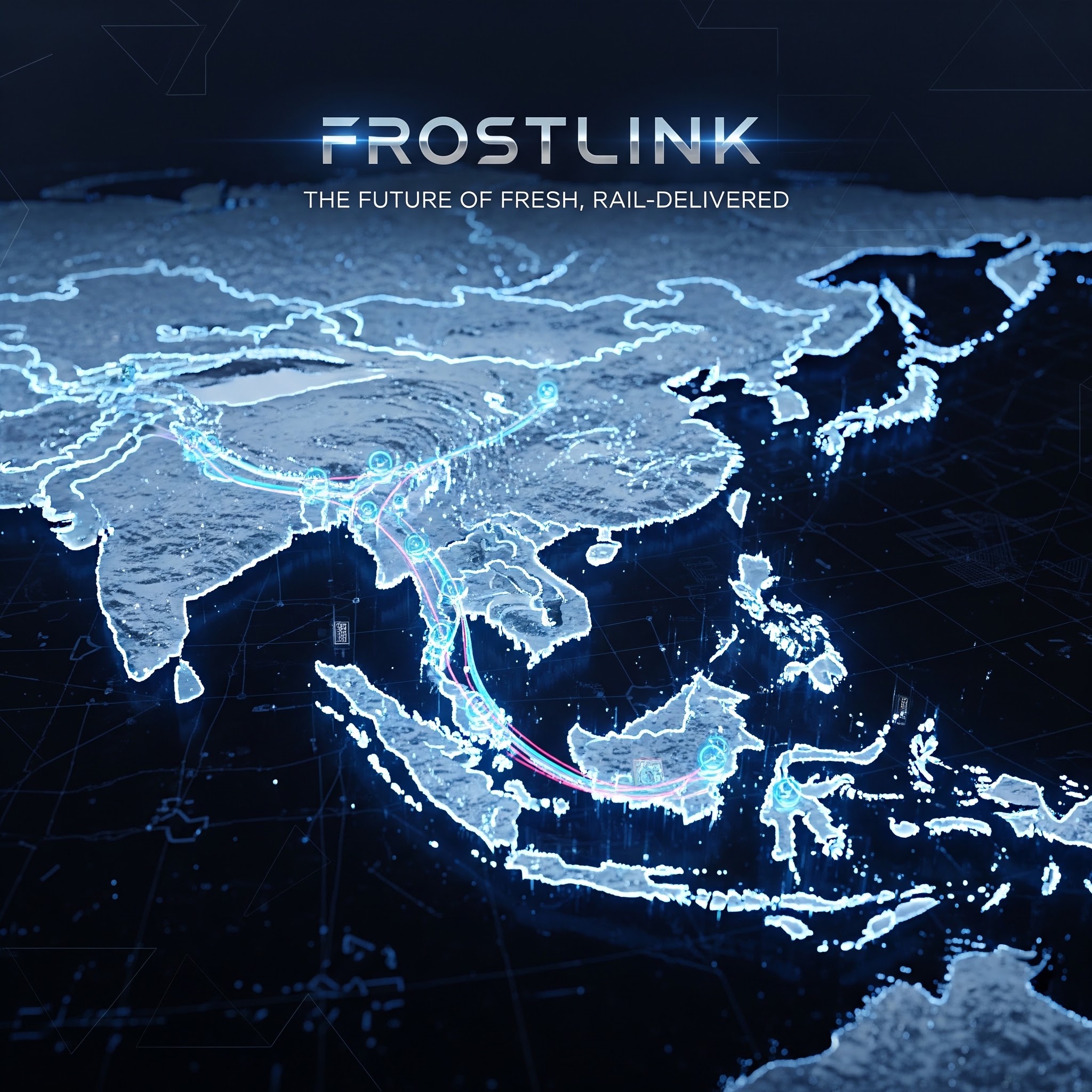
Laos exports more than 80% of its agricultural goods to China. Concurrently, billions of dollars of high-value Thai fruits (like durian) cross through the Vientiane South/Thanaleng Dry Port terminal bound for Chinese consumers.
The Core Problem
Despite the high-speed trains, Southeast Asian fresh food still faces “the last mile” and “the first mile” decay. There is a massive deficit in temperature-controlled warehousing, localized sorting, and modern cold-chain handling facilities inside Laos. Fresh produce spoils quickly if the cold chain breaks at the rail terminals.
The Startup Opportunities
- Micro-Cold Storage & Shared Hubs: Establishing modular, solar-powered cold storage facilities adjacent to secondary railway stations (e.g., Luang Prabang, Vang Vieng, Muang Xay) that smallholder farmers can rent via an app.
- Smart Cold-Chain Tracking SaaS: Developing IoT-sensor platforms that monitor temperature and humidity inside cross-border containers in real-time, instantly alerting shipping companies of potential spoilage before the train crosses the border.
- Value-Add AgTech Processing: Setting up boutique processing plants in the Vientiane Logistics Park (VLP). Instead of exporting raw, heavy fruits, startups can process, freeze-dry, vacuum-seal, and brand premium Lao organics directly for low-tariff rail entry into China.
- [Problem: 30%+ Fresh Food Spoilage via Traditional Freight ]
- [ Rail Breakthrough: 40-Hour Cold-Chain Express Routes ]
- [ Startup Value: Smart Processing & Modular Storage Tech ]
Strategic Business Breakdown
| Metric | Business Opportunity |
| Market Demand | Chinese consumer demand for fresh tropical fruit and Lao organic produce. |
| Value Proposition | Guarantees zero-spoilage and speeds up time-to-market by converting raw agricultural transit into ready-to-sell packaged exports. |